
 Français
 English
 Español
 Italiano
 Deutsch
 Nederlands
 Português
 Polski
 Norsk
 Svenska
 Dansk

Things to Do in Marrakech: Complete Guide 2027
- Activities coordinated from Riad Vendôme in the Marrakech medina include a Moroccan cooking class with Chef Naima from 48 euros per person, private hammam and massage from 49 euros, and a cuisine plus spa day at 99 euros (pool and jacuzzi included).
- Jemaa El-Fna is a 7-minute walk from the riad, with the souks, Ben Youssef Madrasa, Bahia Palace and Saadian Tombs reachable on foot, while quad biking in the Agafay desert starts at 45 euros per person.
- Marrakech in 4 days at Riad Vendôme costs 270 euros for two over 3 nights with breakfast (Essential), 410 euros with the spa package and a dinner (Comfort) and 578 euros in Prestige; the cooking class and the Agafay excursion are added at their published prices.
- Direct booking / WhatsApp: +212 600 608 608
Marrakech is packed with activities: cooking class in a riad, hammam and massage, golf on 11 courses, hot air balloon flight, quad biking in the Agafay desert, zip line, camel rides, Atlas excursions… At Riad Vendôme, Éric organises everything with vetted providers. One WhatsApp and it's sorted. Short on time? Here are the five things to do first.
Activities at Riad Vendôme
Book your activities: + 212 600 608 608
Moroccan cooking class - Learn the tagine with Chef Naima. Cooking + rooftop tasting (souk visit as an option, on request). From €48/person. The cooking class with Chef Naima.
Hammam & Massage: Private oriental hammam, black soap scrub, massage argan. From €48. See the treatments.
Cuisine + Spa: A full day: cooking class in the morning + spa in the afternoon. €99/person. Programme.
Prices updated in October 2026.
Sport & Adventure
Golf - 11 courses (Royal Golf, Amelkis, Samanah…). Packages riad + green fees from €275. Golf stay. A single round costs from €70 to €120 depending on the course and season: see the rates of the Marrakech courses.
Quad & Buggy in the desert Agafay: lunar landscapes 45 minutes from the riad. Quad €45/person, buggy €65/person.
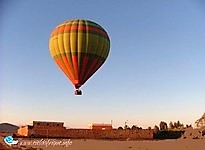
Hot air balloon flight: Fly over the Palmeraie at sunrise. €100/person.
Horse riding: on request, organised by us. Price on request.
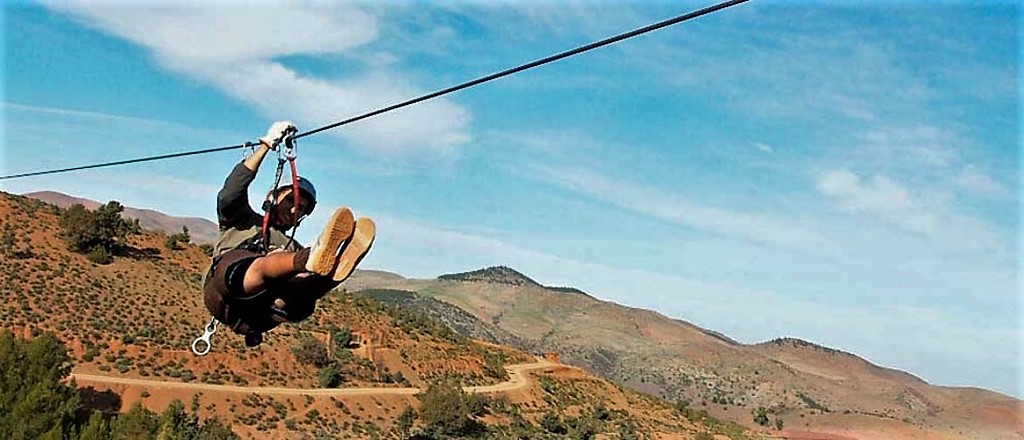
Zipline at Terres d'Amanar: Zipline course near the Ourika valley, with transfer. €65.
Karting: Circuit pro to 20 min. €35/person.
Jet-ski on Lalla Takerkoust lake: 45 minutes from Marrakech, at the foot of the Atlas. €45/person.

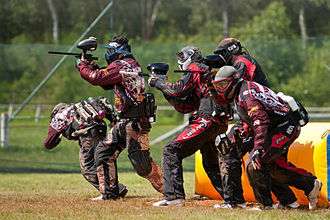
Paintball - Outdoor field, ideal groups and team building.
45 minutes from the riad: the Agafay stone desert at sunset, excursion with dinner from €135 per person.
Discovery & Culture
Medina visit: Souks, Jemaa El-Fna, Ben Youssef Madrasa, Bahia Palace, Saadian Tombs. All on foot from the riad.

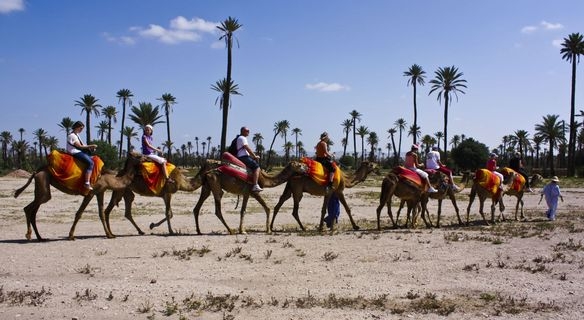
Ride on camelback: Palmeraie or desert Agafay at sunset, 1 hour. €25.
Excursions
Ourika, Essaouira, Ouzoud, Agafay, Oukaimeden. All our excursions.
Éric organises everything: +212 600 608 608
Follow us: @riadvendome on Instagram
Top 10 Things to Do in Marrakech - Éric's Picks
Since 2007 in Marrakech, here are the experiences Éric recommends to every guest:
1. Traditional hammam: the essential Marrakech experience. At Riad Vendôme, from €35/person in a private setting. 2. Jemaa El-Fna at sunset: the world's greatest open-air theatre: musicians, storytellers, food stalls, snake charmers. 10 minutes walk from the riad. 3. Moroccan cooking class: learn to cook tagine and couscous with Chef Naima, from €48/person. 4. The souks: 3-4 hours exploring spice markets, leather tanneries, artisan workshops. Best with a guide (from €13/person). 5. Aït Benhaddou: UNESCO ksar, 2.5h from Marrakech, backdrop to Gladiator and Game of Thrones.
6. Quad biking in the Agafay desert: 45 minutes from the medina, lunar landscape, from €45/person. 7. Koutoubia Mosque & Majorelle Garden: the two iconic Marrakech landmarks, both free or low-cost. 8. Sahara desert circuit: 3-5 days, Merzouga dunes, camel trek, luxury bivouac. The standout memory of any Morocco trip. 9. Rooftop dinner: dozens of medina rooftops with panoramic views and tagines under the stars. 10. Day trip to Essaouira: the Atlantic blue-and-white port city, 2h30 from Marrakech, famous for wind, fresh fish and the film Othello.
Annual Events in Marrakech
Marrakech welcomes major events all year round. In January, the Marathon International of Marrakech attracts thousands of runners under the winter sun. At the end of November, the Festival International of the Film transforms Place Jemaa El-Fna into an open-air cinema. In December, experience a Christmas in the sun or an unforgettable New Year's Eve on our rooftop.
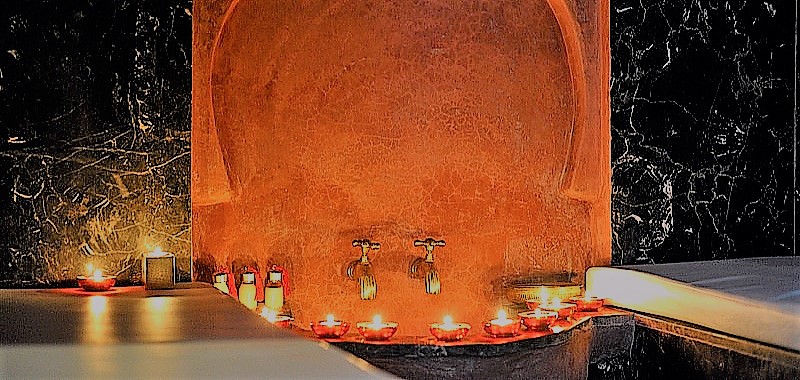
Your First Day Versus Your Third Day
The most useful thing to understand about Marrakech is that your first day and your third day want completely different things from you. On the first day you are still decoding the place: the noise, the light, the way a lane narrows and then opens without warning. Anything ambitious on that first afternoon tends to be wasted, because most of your attention is going on simply staying oriented. By the third day the same walk costs you almost nothing, and you begin noticing what you walked past twice without seeing.
So we tell guests to keep the first day deliberately thin. Arrive, put the bags down, drink the mint tea, sit on the rooftop while the call to prayer moves across the medina, and then go out for a short loop with no destination you are obliged to reach. If you want one fixed point on that first day, make it Jemaa El-Fna in the late afternoon, and make it a walk rather than a visit. You are not there to see anything in particular. You are there to let the scale of the city settle.
By the second and third day your appetite changes. You want interiors, detail and craft: palace rooms, a madrasa courtyard, a workshop where somebody is actually working. You have also worked out by then which streets you like, which makes the whole city cheaper in energy. It is why we would rather see guests book their cooking class or their traditional hammam for the middle of a stay than for the day they land. You enjoy both far more once you are no longer running on travel adrenaline.
A stay that starts slowly almost always feels longer than one that starts fast. Guests who front-load their plans tell us afterwards that the trip went by in a blur. Guests who spend the first evening doing very little tell us they had time for everything.
Choose by Mood, Not by List
Most guides hand you a ranked list and leave you to work out when to use it. That is the wrong shape for this city, because Marrakech is unusually sensitive to weather, heat, energy and the hour of the day. It is far more useful to ask what kind of day you actually have in you, and then choose accordingly. Transport, neighbourhoods and city life are covered in our travel guide for the city.
- A slow day: a long breakfast, a garden, a rooftop, a hammam in the afternoon, dinner without going far. No monuments at all. This is the day guests are most surprised to have loved.
- A busy day: start early, while the light is still soft and the lanes are half empty, and do your walking and your sights before lunch. Trying to carry that pace through the afternoon is how people end up exhausted and short-tempered.
- A day too hot to move: treat the middle of the day as unusable and plan around it. Water, shade, a courtyard, a long lunch, a nap. Marrakech has always organised itself this way; visitors are the only ones fighting it.
- A rainy day: it does rain here, and when it does the lanes run with water and half the plans dissolve. Interiors save the day: museum rooms, palace interiors, a covered stretch of souk, a cookery class, a spa afternoon.
- An evening with nothing planned - the easiest evening to enjoy and the one people most often waste worrying about. Walk towards the square, eat somewhere with a view, come back the way you came.
Match the activity to the mood and you will rarely have a bad day here. Match it to a list written at home weeks in advance, in a different climate and a different frame of mind, and you will occasionally have a miserable one.
The Famous Sights, Treated Honestly
Almost every visitor arrives with the same shortlist, and it is a good shortlist. But the sights on it are not equal, and they are certainly not equal at every hour. Our honest view, after years of sending guests out and listening to what they say when they come back:
Worth the queue. The great palace interiors and the madrasa courtyard repay patience, because what you have come for is the room itself: the carved cedar, the zellige, the proportions of a courtyard built to be cool and quiet. These are places where standing still is the entire point, and where the crowd matters less than you fear, since you can wait for a corner to empty and then have it to yourself for a minute.
Far better early. Anything with a courtyard, a garden or a narrow entrance is transformed by arriving as it opens rather than mid-morning. The difference is not marginal. The same garden that feels like a queue in the middle of the day feels like a private commission shortly after opening. If you take only one piece of advice from this page, take this one.
Reasonably skippable. Some of the smaller ticketed sights are photogenic in pictures and thin in person, and a few of the celebrated viewpoints are really just the roof of somewhere that would like to sell you something. If your time is short, drop the marginal ones without guilt. No guest has ever told us they regretted missing a minor museum.
What people genuinely regret. Never a monument. The regrets we hear are always the same ones: not going up to a rooftop at sunset, not eating twice at the place they liked, not sitting in a garden long enough to stop checking the time, and leaving the hammam until the final afternoon when there was no space left to give them. Those are the things guests write to us about afterwards.
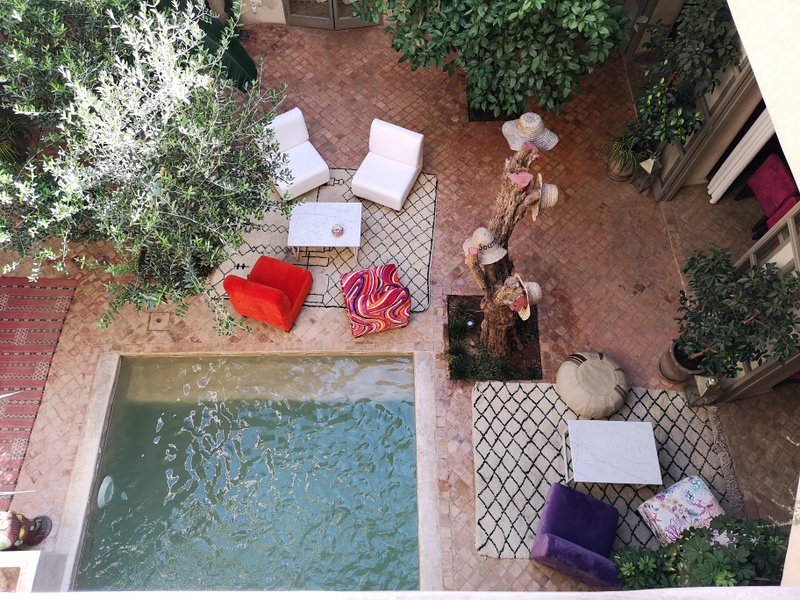
The Medina by Day and the Medina After Dark
The same street is two different places depending on the hour, and understanding that is worth more than any list of addresses. In daylight the medina is commercial and quick: deliveries, mopeds, shutters going up, the whole machinery of a working city that happens also to be beautiful. You are moving through somebody's workplace. The souks are at their most vivid in the morning, when the light comes down in shafts through the slatted roofs and the traders are unhurried because the day is young.
After dark the same lanes empty of commerce and fill with residents. Shopfronts close, the noise drops, families come out, and the pace turns domestic. Streets that felt like a scrum at noon become quiet enough to hear your own footsteps on the stone. Most first-time visitors assume the medina at night will be intimidating; those who go out and try it usually find the opposite: softer, slower and a good deal more human than the daytime version.
Jemaa El-Fna runs the other way. It is quiet and fairly ordinary in the middle of the day, then fills steadily from late afternoon into a full open-air performance. Watching that fill happen is itself one of the better things to do in Marrakech, and it costs nothing at all. Find somewhere to sit above it, order something, and give it a proper hour rather than a passing glance.
A practical note from the riad: if you are uneasy about walking back through the medina after dinner, tell us before you go out. We will walk you out, explain the way back, or come and meet you. Guests who do this on the first night almost never need to ask again.
What to Do With Half a Day
Half a day is the unit most itineraries handle badly. It is too short for anything that needs a car and too long to fill with a coffee, so people default to drifting and then feel they wasted it. In fact the half day is the most useful block you have, because almost everything genuinely worth doing inside the city fits it exactly.
- A morning half day: a Moroccan cooking class from 11:00 to 14:00, that ends with you eating what you made, folding learning and lunch into a single block.
- An afternoon half day: hammam and massage, then nothing. This is the correct use of a hot afternoon and it resets the rest of the stay. See our spa in Marrakech.
- A late-afternoon half day: a couple of monuments at most, walked between rather than driven, finishing on a rooftop as the light goes.
- A first-morning half day: the souks in the company of somebody who knows them, which turns a stressful hour into an interesting one and makes every later visit easier.
- An arrival or departure half day: do not try to force a sight into it. Use the pool, the terrace and the courtyard, and leave the city calm.
The arrival and departure halves are the ones guests most often try to overload. A stay that ends with a rushed monument and a scramble for the airport ends badly, and that is the version you will remember. A stay that ends with a slow morning at the riad ends well.
Doing Less, Better
We would honestly rather you enjoyed three things properly than rushed through eight. That is not modesty about the city; it is simply what we observe. Guests who fill every slot with a monument go home with photographs and very few memories, because the day was spent in transit and in the low-level stress of running late for the next thing. Guests who plan one anchor per day, and leave the rest open, go home with stories.
There is a particular failure worth naming: the five-monument day. On paper it works, since the distances inside the medina are walkable. In practice every stop takes longer than expected, the heat compounds, lunch gets skipped, and by the fourth courtyard nobody is really looking at anything. You come away unable to recall which carved ceiling belonged to which building. A pair of monuments, unhurried, with a long lunch in between, will stay with you for years.
The same logic applies to shopping, to eating and to the souks. One long browse through a quarter you have taken to beats a forced march through all of them. One restaurant you return to beats a different address every night. Marrakech rewards repetition far more than it rewards coverage, and the guests who love the city most are usually the ones who saw the least of it.
Our rule of thumb: one anchor before lunch, one soft thing after it, and the evening left free. If the day turns out better than the plan, take the extra. If it does not, you have still had a good day rather than a forced one.
The Things Nobody Puts on Their List
Ask guests at checkout what they will actually remember, and it is almost never the ticketed item. It is the small, unbooked hour they fell into by accident.
A rooftop at sunset. The medina is low and flat, so the roofline reads as one continuous ochre plain with the mountains behind it and the minarets standing out of it. The light changes quickly and then it is gone. Go up earlier than you think you need to.
A hammam in the middle of the afternoon. Not in the evening, when you are tired already, but in the dead heat, when the city has stopped anyway. You come out slow and clean into the cool of the courtyard, and the evening that follows is a different evening entirely. It is the most underused hour of a Marrakech day.
An hour in a garden, doing nothing. Not a visit with a route through it, but an hour on a bench, in shade, with water somewhere nearby. Marrakech gardens were built for precisely this and are now used almost entirely for photographs.
Watching the square fill up. Arrive before it happens rather than once it has. The interest is in the assembly: the carts arriving, the smoke starting, the crowd thickening in a way that looks like chaos and is in fact the same choreography repeated every evening.
Breakfast with no plan attached. A long breakfast on a terrace with nowhere to be is not a wasted morning. It is very often the morning guests describe first when they get home.
None of these needs booking and none of them costs much. They are simply the things that fall off an itinerary built for maximum coverage. If you would like the wider planning done for you, when to come, how many days to give it, how to shape the week, our Discover Marrakech guide covers that side, and if you do want to leave the city for a day, everything beyond the walls sits on our excursions from Marrakech page.
Frequently Asked Questions
What are the best things to do in Marrakech?
The essentials are a hammam, Jemaa El-Fna at sunset, a cooking class, the souks and a day outside the city. Around Marrakech you can add quad biking in Agafay from €45 per person, a sunrise hot air balloon flight at €100, a 1-hour camel ride at €25, golf on 11 courses, or day trips to Ourika, Essaouira and Ouzoud.
Which activities can you do at the riad itself?
Three, all inside the house: a Moroccan cooking class with Chef Naima from €48 per person, a private hammam with black soap scrub from €35, or hammam and 1-hour massage from €49. The Cuisine + Spa day costs €99 and includes the pool and the rooftop jacuzzi. The cooking class runs 11:00-14:00 or 16:00-19:00, seven days a week.
How do I book Marrakech activities through the riad?
On WhatsApp +212 600 608 608, where Éric replies personally in under 10 minutes for 90% of requests and arranges everything with vetted providers. Book outside activities and the cooking class 24 hours ahead; spa treatments at the riad can be booked up to one hour before. Day passes are booked the day before or the same morning.
How much does a hot air balloon flight in Marrakech cost?
€100 per person for a sunrise flight over the Palmeraie, booked through the riad. The flight lasts about 1 hour and is followed by a Berber breakfast. Because it starts at dawn, book it at least 24 hours ahead on WhatsApp +212 600 608 608, and keep the following afternoon light, for example with a hammam back at the riad.
Can you play golf in Marrakech, and how far are the courses?
Yes, Marrakech has 11 golf courses, including the Royal Golf, Amelkis and Samanah, all within 15-30 minutes of the riad. Packages combining the riad stay and green fees start from €275. Éric books tee times and transfers on WhatsApp +212 600 608 608, and adding 6 dinners by Chef Naima to a golf stay costs an extra €126.
How should I plan my first day in Marrakech?
Keep it deliberately light: arrive, settle in, sit on the rooftop and take a short walk with nowhere you must reach. If you want one fixed point, make it Jemaa El-Fna in the late afternoon, about 7 minutes on foot from the riad, treated as a walk rather than a visit. Save the cooking class and hammam for the middle of the stay.
Is it better to visit the main Marrakech monuments early in the day?
Yes, and the difference is not marginal. Anything built around a courtyard, a garden or a narrow entrance changes completely if you arrive as it opens: the light is soft and the space is quiet. By mid-morning the same place can feel like a queue. Do your sights before lunch, then keep the afternoon heat for the pool or a hammam.
Is the Marrakech medina different at night?
Yes, completely. By day the lanes are commercial and fast, full of deliveries, mopeds and trade; after dark the shops close, residents come out and the pace becomes domestic and quieter. Jemaa El-Fna works the other way, filling from late afternoon. If you feel uneasy walking back after dinner, tell the riad before you go out and someone will meet you.
What can I do in Marrakech when it is too hot to walk around?
Plan around the midday heat: shade, water, a courtyard, a long lunch and a nap. An afternoon hammam is the most underused hour of a Marrakech day; hammam and 1-hour massage at the riad cost €49 per person. July and August reach 36 to 38 °C, so do your walking early and go up to the rooftop after sunset.
What is there to do in Marrakech if it rains?
Choose interiors: palace and museum rooms, a covered stretch of souk, a cooking class or a spa afternoon all work in any weather. The riad's cooking class costs €48 per person for 3 hours, and the Cuisine + Spa day €99. In winter the patio is covered and heated to 23 °C, so the courtyard and salons stay comfortable while the lanes run with water.
How many sights should I try to see in one day in Marrakech?
Two, taken slowly, with a long lunch in between. The five-monument day works on paper because the medina is walkable, but every stop runs long, the heat builds and lunch gets skipped. A good rule is one anchor before lunch, one soft thing after it, and the evening left free; the riad is 7 minutes on foot from Jemaa El-Fna.
What do visitors most often regret missing in Marrakech?
Never a monument: guests regret the unbooked things. Not going up to a rooftop at sunset, not returning to the restaurant they liked, not sitting in a garden long enough, and leaving the hammam until the last afternoon when no slot was left. Spa treatments at the riad can be booked up to one hour before, from 9 am to 9 pm.
⭐ Google 4.3/5 (247 reviews) · ✈️ TripAdvisor 4.2/5 · 🎉 500+ events organised since 2013
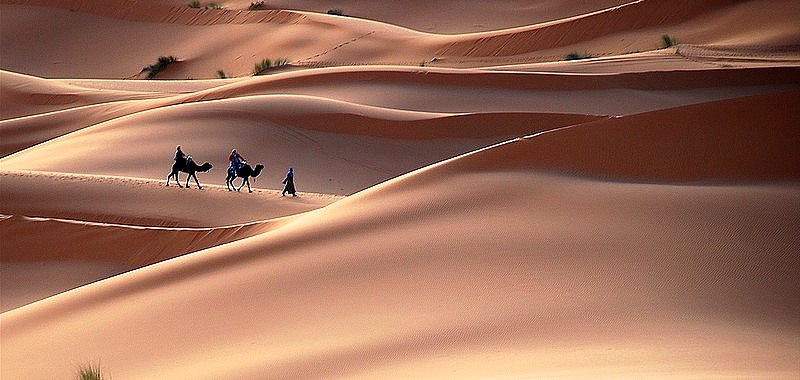
Do It All: Marrakech in 4 Days for Two
If you want to experience the essentials of Marrakech without planning each activity separately, Riad Vendôme offers Marrakech in 4 Days, 4 days / 3 nights for two in three tiers, to which the experiences on this page are added at their published prices. Perfect for first-time visitors and couples who want a worry-free Marrakech stay.
Marrakech in 4 Days, for two (4 days / 3 nights, flights excluded)
✔ Essential €270: double room for three nights, Moroccan breakfast for two
✔ Comfort €410: the Essential base plus the spa package for two and one Moroccan dinner for two
✔ Prestige €578: room at €120 a night, breakfast, the heated pool-and-jacuzzi spa package for two, one dinner and return airport transfers
✔ To add: cooking class with Chef Naima €48 per person, Agafay excursion from €135 per person
Tourist tax (€3 per person per night) not included, paid at the riad.
For full riad private hire (from 15 guests), request a custom quote on WhatsApp. Book direct with the owner.
Book Marrakech in 4 Days: +212 600 608 608
(Personal WhatsApp reply in under 10 minutes for 90% of requests)
Planning your trip? See our Discover Marrakech guide: itineraries, how many days and when to visit.
The riad is classified by the Moroccan Ministry of Tourism.
See also: Stays & Programmes - every one of our itineraries in one place.
Planning your sightseeing? See our guide to what to see in Marrakech: must-see monuments and walking distances from the medina.
A winter sun destination
Winter is arguably the best season to explore Marrakech: clear skies, comfortable daytime warmth and far fewer crowds in the souks, palaces and gardens. Pair your sightseeing with a warm riad to come home to each evening. Discover our winter sun in Marrakech guide.