
|
|
| | Book | | | ✉ Contact | | | +212 600 608 608 |
 Français
  English
  Español
  Italiano
  Deutsch
  Nederlands
  Português
  Polski
  Norsk
Norsk  Svenska
  Dansk
Dansk 

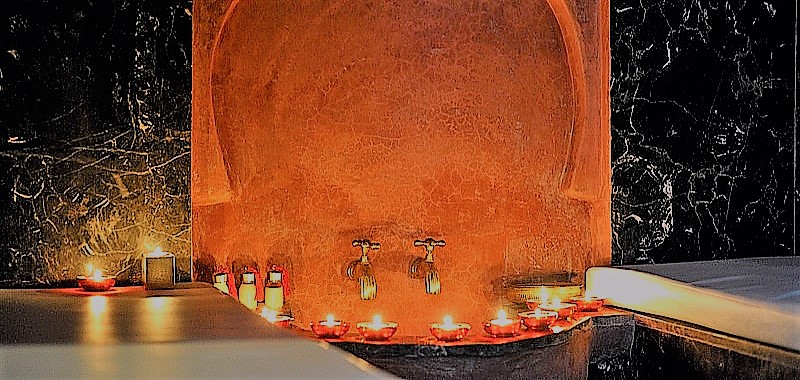
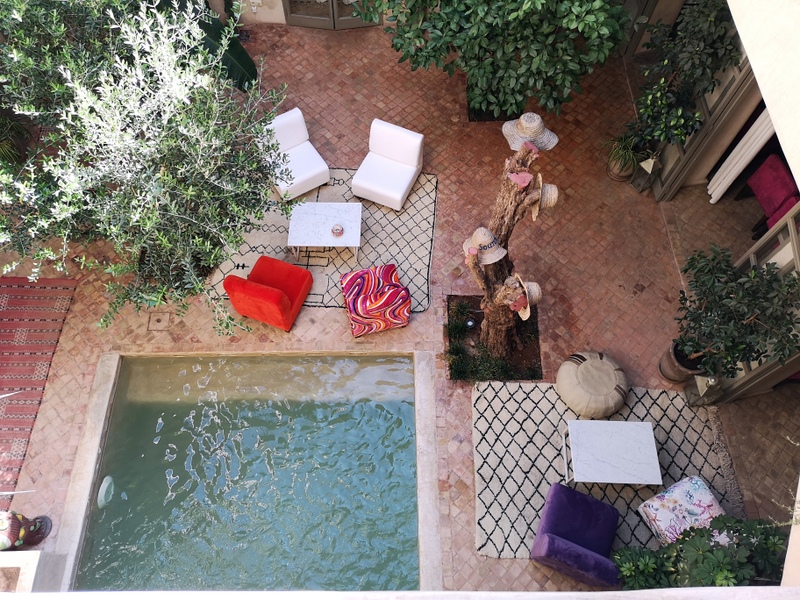
French-Run boutique hotel in Marrakech: When Passion Creates Excellence
Riad Vendôme is a French-run boutique hotel in Marrakech. Éric, passionate about architecture, has been settled in Marrakech since 2007. He renovated this former 18th-century boutique riad in Dar El Bacha with 25 Moroccan artisans and manages it personally. French and English communication, tailor-made concierge, from €70/night.
In brief: French-run riad in Marrakech
- Riad Vendôme is a French-run boutique riad in Marrakech, managed personally by Éric, a French owner settled in Marrakech since 2007, with rooms from 70 euros per night.
- The 18th-century riad in Dar El Bacha, 100 metres from Dar El Bacha Palace, was restored over 18 months by 25 Moroccan artisans, zellige layers, tadelakt plasterers and Atlas cedar carpenters.
- Open to travellers since 2011, the main riad has 12 rooms and a second riad 100 metres away raises capacity to 20 rooms for up to 50 guests, with a 4.2/5 Google rating.
- Direct booking / WhatsApp: +212 600 608 608
Some riads are just hotels. Riad Vendôme is the story of a man in love with a city. Éric is French. In 2011, he left France for Marrakech: drawn by the beauty of the red city, the warmth of the Moroccan welcome and the magnificence of the traditional architecture. He discovered a boutique hotel in ruins in the upscale neighbourhood of Dar El Bacha, 100 metres from Dar El Bacha Palace. He fell in love. 18 months of renovation, 25 Moroccan artisans and thousands of zellige tiles later, Riad Vendôme & Spa was born.
A boutique riad from the 18th century, revived with passion
Book Riad Vendôme
Response within minutes. Free quote, no commitment.
Or fill out our Reservation form
The former riad of the Glaoui dignitaries was a sleeping marvel. Two independent patios, majestic proportions, remnants of décor that bore witness to its past splendour. Éric entrusted the renovation to the maalems: Moroccan master artisans, who perpetuate skills passed down from father to son. The zelligeurs hand-carved and laid thousands of mosaics. The tadlakeurs coated the walls in stone-polished plaster, smooth as satin. The carpenters carved Atlas cedarwood for the ceilings and doors. The result is a boutique hotel that breathes authenticity, because it is authentic.
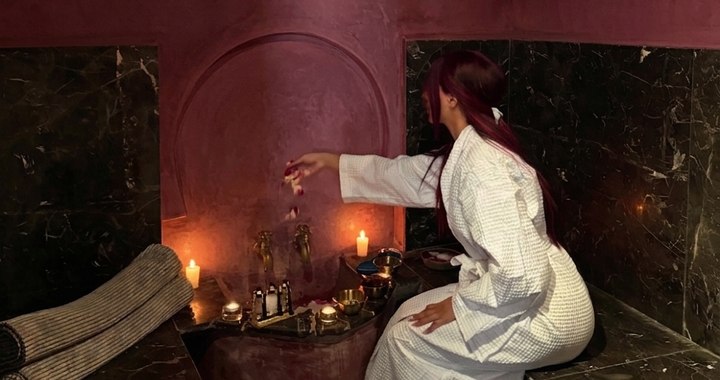
The Advantage of a French-Run Riad
You communicate in French before, during and after your stay. Éric understands your expectations and habits. He knows the subtleties of Moroccan culture and serves as a bridge between two worlds. It's a precious advantage, especially if it's your first trip to Morocco: he helps you avoid the pitfalls, recommends the best addresses and organises everything so you only have to enjoy.
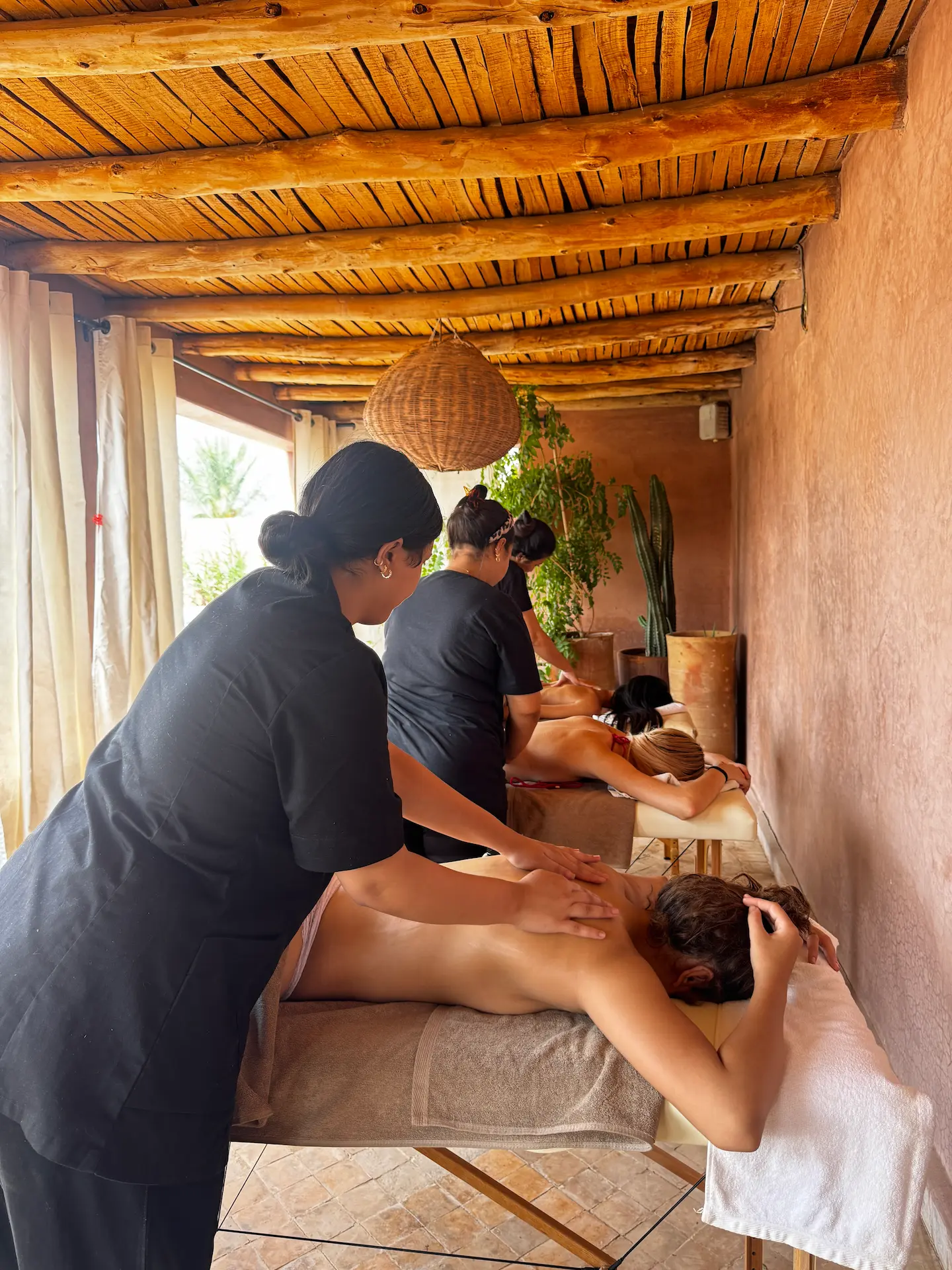
More Than Accommodation: A Concierge at Your Service
Éric doesn't just hand you a room key. He puts together your stay as a tailor-made programme: excursions in the Ourika Valley or to Essaouira, desert circuits in the Sahara, Moroccan cooking classes, bookings at the best restaurants, airport transfers. Everything goes through a single point of contact, available by WhatsApp, who responds within minutes. It's the freedom of independent travel with the comfort of a palace concierge.

Hosting Guests Since 2011, Hundreds of Smiles
Since 2011, the Riad Vendôme has hosted thousands of travellers, couples, families, groups of friends, marathon runners, film festival cinephiles, entrepreneurs on business seminars. The main riad has 12 rooms, and with a partner riad 100 metres away, the capacity rises to 20 rooms for 35, 40, 50 guests. Rated 4.2/5 on Google. These ratings are not the result of chance: they reflect daily attention to detail and a passion that never fades.
WhatsApp +212 600 608 608 - Éric responds personally.
› Book at Riad Vendôme | › How to choose the best riad
Booking abroad for the first time: what actually settles the nerves
For a traveller who has never been to Morocco, the hesitation before a first enquiry is rarely about the country. It is about how little can be verified from home. What settles it is not reassurance in the abstract but a short list of very ordinary things: being able to ask a question in your own language and be understood exactly; knowing what is included before you arrive rather than at the door; having the answer in writing; and having no ambiguity at all about what you will pay.
That is what European management of a Moroccan house adds, and honestly it is the whole of what it adds. An enquiry sent from Manchester, Lyon or Brussels carries a European traveller’s assumptions folded into it, and it is read by someone who recognises them at once, because they are also his, and who knows exactly how the house and the medina work. Nothing is lost in translation, because there is no translation step.
The point is not oversight. It is that one person holds both sets of expectations at once, so you never have to explain yourself twice and never have to guess what was meant.
- What your rate includes and what it does not, line by line.
- How you reach the door from the airport, who meets you, and where.
- What breakfast consists of, and whether dinner is arranged in advance.
- Deposit and balance terms, in the currency quoted.
- Who to message if your flight is delayed, and in which language.
Cultural translation as a service, not a correction
One version of this idea deserves dismissing straight away: the suggestion that Moroccan hospitality needs European supervision. It does not, and anyone who has been welcomed into a Moroccan home knows why. Moroccan hospitality is among the most generous traditions of welcome anywhere, and a riad in the medina practises it at a level no international hotel format has reproduced. Nothing here is being corrected or brought up to standard.
What is genuinely useful is narrower. A guest who has never been to Morocco does not know what to expect, and there is no reason they should; expectations are learned at home rather than inherited universally. Someone who has lived on both sides can set them accurately in advance, in the vocabulary you already use. In practice it looks unremarkable: answering the question you were slightly embarrassed to ask, or saying which day is the sensible one for the hammam. None of it changes Morocco. It removes the friction of arriving somewhere without a map of the conventions.
Where first-time visitors most often feel uncertain
The arrival is the part people rehearse anxiously in advance. The medina is a historic pedestrian quarter of narrow lanes, and vehicle access stops where the lanes become too narrow for a car; the last stretch is made on foot. That is less an inconvenience than the reason the quarter survives intact. Knowing beforehand where the vehicle stops, that a member of staff meets you at the nearest drop-off point, how long the walk is and what the lane looks like turns the arrival from an unknown into a step in a plan.
Three further things come up in almost every conversation with a first-time visitor. None is a problem; each is simply unfamiliar, and easier to enjoy once described rather than discovered.
- Being spoken to in the street. The medina is a lively commercial quarter where people talk to one another, and visitors are included in that. Sometimes it is trade, sometimes directions, sometimes simple friendliness. A smile and a polite refusal is entirely normal and gives no offence; so is saying yes.
- Haggling in the souks. For many goods the price is arrived at through conversation rather than printed on a label. It is a sociable exchange with its own rhythm and courtesies, not a confrontation, and a real skill on the seller’s side. Newcomers enjoy it far more once someone has explained how it usually goes.
- Tipping. Small tips are customary in a number of everyday situations, usually in cash and small notes, and discretionary rather than fixed. What unsettles visitors is not the custom but uncertainty about when and roughly how much.
None of this is a warning, and none of it is a comment on the people you will meet, whose courtesy towards guests is one of the reasons visitors return. It is the ordinary texture of a city that does things its own way, and conventions can simply be explained over a glass of mint tea by someone who lives here.
Money in writing: quotes, inclusions and the absence of surprises
Nothing damages a holiday abroad more efficiently than uncertainty about money, and nothing is easier to remove. Every enquiry is answered by a person rather than an automated engine, and the answer takes the form of a written quote, normally within minutes, naming what is included, what is optional and what the terms are. If something is added afterwards, a transfer, a treatment, an excursion: it is priced and confirmed in writing before it happens rather than totalled up quietly at the end.
This matters more on a first trip than on a later one, because a first-time visitor has no internal reference for what things ought to cost. Written clarity substitutes for that missing reference: you need not be an expert on local prices if the figure you agreed is the figure you pay and you can read exactly what it covers.
- Read the total and understand every line beneath it without a follow-up question.
- See which items are optional, and when deposit and balance fall due.
- Forward the document to whoever else is paying, or to friends splitting a group booking.
- Arrive with nothing left to be negotiated on the doorstep.
Booking direct follows the same logic: the person who quotes you runs the house. Compare the routes on direct prices versus platform prices, or go straight to booking direct.
A Moroccan house, run day to day by a Moroccan team
It would be strange to advertise European management as though the house itself were European. It is not. The building is a Moroccan riad, restored by Moroccan master craftsmen using Moroccan techniques, and everything you touch in it, the zellige, the tadelakt, the carved cedar, was made by hands that learned the trade here. Daily life in the house is run by a Moroccan team, and the kitchen is Naima’s, who is both manager and head chef; her cooking has its own page, Chef Naima.
Continuity of staff is a quiet thing guests notice without being able to name it. When the people who greet you are the people who were here last season, they know how the house behaves: which room is coolest in the afternoon, what a family with small children needs at breakfast. That knowledge is in no manual and cannot be recruited quickly.
So the proposition was never that a European runs a Moroccan house better. It is that two traditions are each given their proper place: Moroccan hospitality, cooking and craft as they are, alongside European habits of written confirmation and plain answers about logistics and money. Neither is asked to give way. Our page on being hosted rather than merely booked goes further into how that feels, and you can meet the owner on his own page.
What a French-run riad is not
This is not a Europeanised riad. The food is not toned down for foreign palates. The experience is not sanitised. Were any of those true, the reason for choosing a riad over an international hotel would have disappeared entirely.
- The house stays Moroccan. The architecture, proportions, patios and decorative work are what they were meant to be. Nothing has been flattened out to feel more like home.
- The cooking is not made bland. A tagine is seasoned the way a tagine is seasoned, the mint tea is sweet, the breakfast is Moroccan. Genuine dietary needs are accommodated on request, which is an entirely different matter from adapting a cuisine downwards. Anyone curious can learn to make it in a cooking class.
- The city is not filtered. You are in a working medina, not a resort compound: calls to prayer, motorbikes in the lanes, cats on the walls, market noise and heat. A host prepares you for that and helps you enjoy it; nobody pretends it away.
Clarity is provided in your language; the experience itself is not translated.
French, British and other European travellers: what changes and what does not
For French travellers the effect is most obvious: the whole conversation, from first enquiry to the last message after departure, happens in French with someone French about a place he knows intimately. Nuance survives, and a preference can be expressed with the shading that usually disappears when both sides fall back on a shared second language.
For British travellers, correspondence runs in English, quotes are issued in euros, and the things most often left unspoken are stated instead: what breakfast actually is, what time things happen, what is and is not walking distance, what the arrival looks like. The familiar reservation about booking a small independent property abroad, that nobody answers the email, that terms are informal, that details only become clear on arrival, is met by doing the opposite, in writing, before you fly.
For Dutch, German, Belgian, Swiss, Italian, Spanish and Portuguese guests, correspondence is handled in English or French and the same principles apply: written quotes, itemised inclusions, an agreed arrival plan, one contact who answers. What changes between nationalities is only the language and which assumptions need stating aloud. What does not change is anything that matters about the stay: the same house, the same team, the same kitchen, the same city outside the door. Our comparison of a riad or a hotel in Marrakech and the Marrakech travel guide cover the rest of the practical groundwork.
Frequently Asked Questions
Is the owner really French?
Yes, Éric is French. He has been settled in Marrakech since 2007 and personally manages the Riad Vendôme. It is your single point of contact via WhatsApp.
So how long has the riad been open?
The Riad Vendôme has welcomed travellers since 2011. The building itself dates from the 18th century.
Can Éric arrange my whole stay?
Absolutely: excursions, desert circuits, transfers, restaurants, activities. He is like a personal concierge who knows Marrakech by heart.
Is the riad suitable for a first trip to Morocco?
It's ideal. Éric anticipates your questions, guides you in the medina on the first day, and gives you all the tips to enjoy Marrakech without stress.
How long is the flight to Marrakech from the US and Canada?
There are no non-stop flights from the United States; from New York allow about 8 to 9 hours via Casablanca on Royal Air Maroc, which hubs there. From Canada, Royal Air Maroc runs a seasonal non-stop from Montreal to Casablanca, then a short connection to Marrakech. The riad is about 20 minutes from Marrakech-Menara airport.
Where exactly is Riad Vendôme located in Marrakech?
Riad Vendôme is at 217 Derb El Halfaoui, in the Dar El Bacha district of the Marrakech medina. It is a 7-minute walk from Jemaa El-Fna square, close to the Koutoubia and the souks, so you reach the main sights on foot without needing a taxi. A member of staff meets you at the nearest vehicle drop-off point on arrival.
How do I book, and how quickly do you reply?
You book directly with the riad, not through a platform. Send your dates and group size on WhatsApp at +212 600 608 608 and you receive a written quote within minutes. There is no automated booking engine: every stay is confirmed by a person, and the payment terms are set out in the quote you receive.
Can the whole riad be privatised, and for how many guests?
Yes, Riad Vendôme can be hired exclusively. The main riad has 12 rooms and goes up to 20 rooms with a partner riad 100 metres away, for exclusive hire of up to 50 guests. During an exclusive hire there are no other guests: the pool, hammam, jacuzzi and rooftop are reserved for your group alone.
How big are the rooms and what is in them?
Between 10 and 22 m², depending on the room. Room Tan Tan is 10 m² for 2 guests on the ground floor, Suite Junior Merzouga and Suite Junior Asni 15 m², Suite Junior Zagora, Suite Junior Essaouira, Suite Junior Ouarzazate and Suite Marrakech 18 m², Suite Junior Dakhla 16 m² on the rooftop with direct terrace access, and Suite Oukaïmeden 22 m² for 4 guests. Every room has an en-suite bathroom with a tadelakt shower, hot and cold air conditioning, Simmons VIP bedding, a 40" TV with international channels and fibre Wi-Fi. Full sizes, beds and rates are on the rooms and rates page.
Can I ask questions in English before I commit to anything?
Yes, and it costs nothing to do so. Send whatever you want to know on WhatsApp or by email before booking anything, in English or French, and it is read and answered by the person who runs the house. Nothing is auto-generated. If your question is about something that is not on the website at all, that is exactly the kind of question worth asking.
What actually happens when I reach the medina for the first time?
The medina is pedestrian, so a vehicle brings you to the nearest drop-off point and a member of staff meets you there for the short walk to the door. You are told in advance where that stop is, who is meeting you and what the lane looks like, so the arrival is a step in a plan rather than something to work out with luggage in the dark.
Will someone explain haggling and tipping before I go out?
Yes, and it is one of the more useful conversations of a first stay. In the souks many prices are settled through conversation rather than printed on a label, and small tips are customary in various everyday situations. Neither is complicated once the conventions have been described. Ask before your first walk out and you will feel comfortable rather than uncertain.
Does European management mean the food is adapted for foreign tastes?
No. The kitchen is Moroccan and cooks Moroccan food as it should be: a tagine is seasoned the way a tagine is seasoned, the mint tea is sweet, the breakfast is Moroccan. Genuine dietary requirements are accommodated when you tell us in advance, which is an entirely different thing from toning a cuisine down for visitors presumed unable to enjoy it.
Will I know the full price before I travel, with nothing to settle on arrival?
That is the intention. You receive a written quote setting out what is included, what is optional and what the payment terms are. Anything added later, such as a transfer, a treatment or an excursion, is priced and confirmed in writing before it happens. There is nothing to negotiate on the doorstep and no total assembled quietly at the end.
Is the team Moroccan, and will I see the same faces during my stay?
The house is run day to day by a Moroccan team, and the kitchen is Naima’s, who is both manager and head chef. Continuity matters more than guests expect: staff who have been here across seasons know how the building behaves and what a family or a group will need, which is why things tend to be right without having to be requested.
Does a French-run riad feel less Moroccan than the alternatives?
It should not, and that is deliberate. The building, the craftsmanship, the cooking and the team are Moroccan, and the medina outside the door is a working quarter rather than a resort. What European management adds is bilingual clarity before and during the stay: plain answers, written confirmations, expectations set accurately. The experience itself is not translated for you.
Choosing a French-Managed Property in Marrakech
Choosing a French-managed boutique hotel in the medina removes the language barrier and the uncertainty that often comes with smaller Moroccan-run guesthouses. Éric, a French national settled in Marrakech since 2007, has built an operation that combines authentic Moroccan architecture and hospitality with European standards of organisation and responsiveness. Your messages are answered in English or French, invoices are clear and detailed, and the GDPR-compliant booking process gives you full confidence before you travel.
Naima, the manager and head chef, brings a 5/5 Google Cuisine rating and more than a decade of organising events for European groups. She speaks French and Arabic, coordinates all on-the-ground logistics, and has become the heartbeat of the operation. Together, Éric and Naima have hosted over 500 events, from intimate family breaks to 45-person corporate seminars: making Riad Vendôme one of the most experienced directly-managed boutique addresses in Marrakech.
The French Expatriate Community in Marrakech: Context and Trust
There are approximately 12,000 French expatriates registered in Marrakech, making it one of the largest French communities on the African continent. Many run boutique guesthouses, restaurants or artisan businesses. The common thread is a particular approach to hospitality: influenced by French standards of service and communication while deeply embedded in Moroccan culture and supply chains. Naima, who runs the day-to-day operations at Riad Vendôme alongside Éric, trained in a Marrakech culinary tradition, while her 5/5 Google Cuisine rating reflects a standard that consistently surprises French guests accustomed to French cuisine.
For British, Dutch or German guests, a French-managed property often provides a useful cultural bridge: someone who understands European expectations around cleanliness, meal timing, breakfast quality and response time, but also knows how to navigate the medina's suppliers, artisans and service providers. Éric personally handles every group booking and speaks both English and French. The conversation begins on WhatsApp and typically ends with a clear, detailed PDF quote, no ambiguity, no surprises on check-in.
⭐ Google 4.2/5 (617 reviews) · 🏠 Booking 8.3/10 · ✈️ TripAdvisor 4.2/5 · 🎉 500+ events organised since 2013
Why Choose a French-Managed Property in Marrakech?
Choosing a French-managed boutique hotel in the medina removes the language barrier and the uncertainty that often comes with smaller Moroccan-run guesthouses. Éric, a French national settled in Marrakech since 2007, has built an operation that combines authentic Moroccan architecture and hospitality with European standards of organisation and responsiveness. Your messages are answered in English or French, invoices are clear and detailed, and the GDPR-compliant booking process gives you full confidence before you travel. Naima, the manager and head chef, brings a 5/5 Google Cuisine rating and more than a decade of organising events for European groups. She speaks French and Arabic, coordinates all on-the-ground logistics, and has become the heartbeat of the operation. Together, Éric and Naima have hosted over 500 events, from intimate family breaks to 45-person corporate seminars: making Riad Vendôme one of the most experienced directly-managed boutique addresses in Marrakech.
The Riad Vendôme is classified by the Moroccan Ministry of Tourism.
Meet your host: Meet Éric, the owner.